
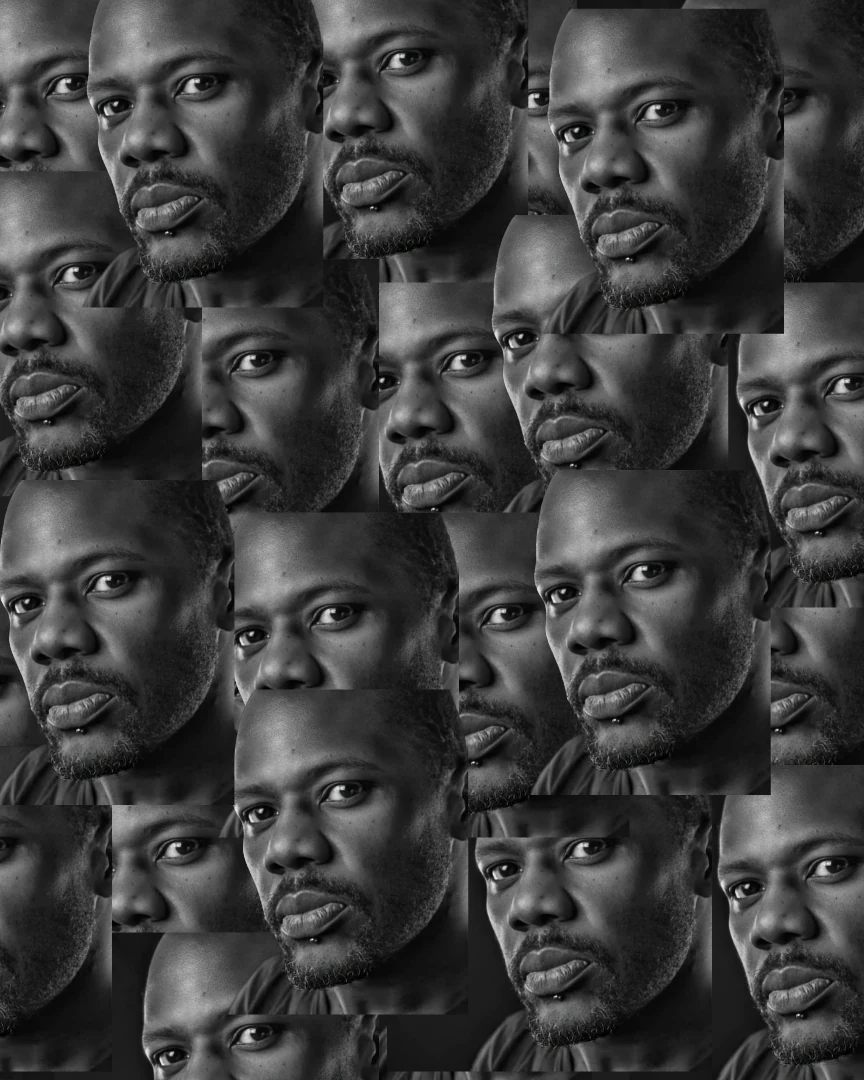
The New Ways on The Testament, Berlin and Building Community
Interview by Jesucio (Future//Films) for Outburst Intervals.
11 min read
Some friendships become collaborations. Others become lifelong conversations.
Long before Outburst Intervals and Dysfunct Records, before Berlin became a second home for one and a permanent home for the other, Jesucio (Future//Films) and Shelbric Fuller, better known as The New Ways, met as teenagers in Miami. Neither was thinking about labels, streaming numbers or release strategies. They were simply chasing records, discovering new sounds and talking endlessly about music.
Those conversations never really stopped.
Over the years, life took both artists in different directions before eventually reconnecting them in Berlin, a city that deepened both their friendship and creative dialogue. Ideas about music soon expanded into conversations about philosophy, technology, art, culture and the changing role of independent artists in electronic music.
Their first official collaboration through Outburst Intervals arrived in 2021 with The New Ways' remix of Counting.Backwards, a reinterpretation that quietly became one of his most-streamed remixes and marked the beginning of an even closer creative relationship.
Now, that relationship enters a new chapter.
Following the release of The Danceables Collection (2010–2024), The New Ways returns with The Testament, his forthcoming EP arriving September 3 via Dysfunct Records, the label Shel founded to champion adventurous electronic music without compromise. It follows close on the heels of Warsaw Variations, a limited edition clear vinyl pressed by Outburst Intervals this past July that sold out almost immediately, and sets up what's next: The New Ways' upcoming Asylum EP, his first EP-length release on Outburst Intervals.
Rather than discussing genres, promotional campaigns or algorithms, Jesucio sat down with Shel for the kind of conversation they've always had, one about curiosity, evolution, friendship and building community beyond the dancefloor.
Q&A
Jesucio: Let's start at the beginning. We first met as teenagers in Miami before either of us had released a record. Looking back now, did you ever imagine we'd still be making music together all these years later?
The New Ways: Not even remotely. Back then we weren't thinking about careers, we were just completely fascinated by music. We'd spend hours talking about records, production techniques, artists we'd discovered and ideas that probably sounded impossible at the time. What's funny is that none of those conversations were about success. They were about curiosity. Looking back, I think that's why we've stayed connected creatively for so long. The technology has changed, our studios have changed and the industry has changed several times over, but that curiosity has never disappeared. It's still the reason I sit down to make music.
Jesucio: Then Berlin became another chapter in that story. You stayed. I eventually came to think of Berlin as my second home. Looking back, I don't think we realised how much that city would shape both of us.
The New Ways: Berlin has a way of changing your relationship with time. It's one of the few places where experimentation is genuinely valued. You're encouraged to explore instead of constantly chasing whatever happens to be fashionable that month. For me, that removed a lot of creative pressure. Some of my favourite memories from those years weren't even inside clubs or studios. They were long conversations walking through the city after nights out, talking about music, philosophy, art, politics, technology, everything. Eventually all of those conversations found their way back into the music. Berlin doesn't tell you who to become. It gives you permission to find out for yourself.
Jesucio: Listening back to The Danceables Collection, I never heard it as a retrospective or a "greatest hits." It feels more like reading someone's journal over fourteen years.
The New Ways: That's exactly how I see it. None of those tracks were written with the idea that they'd eventually become a collection. They were simply moments from different studios, different apartments, different emotional states and different chapters of life. When I finally assembled everything, I realised the common thread wasn't a genre or a production style. It was movement, not just movement on a dancefloor, but movement as a person. Looking back, the collection documents how I've changed creatively and personally without trying to force a narrative. Life rarely unfolds in straight lines. Neither does music.
Jesucio: One thing we've always agreed on is not getting trapped by genre definitions. People will naturally describe your music as house, techno, electronica or something else, but we've always treated those labels as rough signposts rather than destinations. Has that always been your philosophy?
The New Ways: Genres are useful because they help people discover music. They help DJs, they help record stores, they even help streaming platforms. But they shouldn't become creative instructions. The moment I start thinking, "I'm making a techno record" or "this has to be house," I've already limited where the music can go. I'd much rather follow a feeling than a category. Does it create an atmosphere? Does it move you emotionally? Does it surprise you? Does it sound honest? Those questions are far more important to me than deciding which playlist someone eventually files it under. The records that have stayed with me throughout my life were never defined by genre. They were defined by how they made me feel.
Jesucio: That's probably why your records always seem to balance movement with reflection. People dance to them, but there's also something happening underneath.
The New Ways: I've never believed dance music has to stop at the dancefloor. Some of my favourite records make you move physically while quietly asking bigger questions emotionally. That's always interested me. I love making records DJs can play at peak time, but I also love the idea that someone listens again six months later on headphones and discovers something they completely missed the first time. Music can exist on multiple levels. It doesn't have to choose between body and mind.
Jesucio: You've spoken publicly about metamodernism, which isn't exactly a word you hear every day. How would you explain that philosophy today?
The New Ways: For me, it's become about embracing contradiction instead of trying to solve it. You can be optimistic while acknowledging uncertainty. You can embrace technology while still searching for humanity. You can make serious music that still has humour, or emotional music that still works in a club. Life isn't either/or, it's usually somewhere in between. I've become much more interested in exploring those spaces than choosing one side. That's probably why my records don't always fit neatly into one category. I'm comfortable with that now, maybe more than ever.
Jesucio: Collaboration has always been an important part of your work. Across The Danceables Collection you worked with artists like Future//Films, Stephan Nero, Janae Catt and Destin Markland. What do collaborations give you that working alone doesn't?
The New Ways: Perspective. Every artist hears the world differently. The moment another person becomes part of the process, the music starts revealing possibilities you probably wouldn't have discovered by yourself. I've never seen collaboration as compromising an idea, it's expanding it. Some collaborations happen because the timing is right. Others happen because there's years of friendship underneath them, and those usually carry a different kind of trust. Working with you has always felt like that. We don't have to explain everything. Sometimes a conversation we've had years earlier suddenly appears inside a piece of music without either of us realising it. That's one of the things I enjoy most about making records with people you've grown alongside.
Jesucio: Our first official Outburst Intervals release together was your remix of Counting.Backwards in 2021. It quietly became one of your most-streamed remixes. Looking back now, does that release feel like the beginning of this new chapter?
The New Ways: I think it did, even if neither of us saw it that way at the time. Because we'd known each other for so long, there was never any pressure around working together. The remix happened naturally, just like most of the things we've done over the years. Seeing people connect with it was really rewarding because it never felt calculated. It was simply one artist interpreting another artist's work through years of shared conversations and mutual respect. Looking back now, I can definitely see it as the bridge between our friendship and what's become a much deeper creative partnership.
Jesucio: Before we get to Asylum, I have to bring up Warsaw Variations. That clear vinyl sold out almost instantly. What was the story behind that one?
The New Ways: That one was special. Warsaw started as a track on Karen, and when you saw the artwork I'd put together for the remix LP, you loved it enough that you offered to put out a special edition through Outburst Intervals. It's the original "Warsaw" plus three variations, pressed on clear vinyl. Watching it move that fast was surreal. It reminded me how much people still want physical objects when the object itself means something.
Jesucio: The Testament is landing through Dysfunct, but you and I both know Outburst Intervals isn't far behind. You're working on your first EP-length release for OI, Asylum. What does it mean for that one to happen on the label after everything we've built together?
The New Ways: It means a lot, honestly. Dysfunct has always been about giving artists room to experiment without feeling boxed in, and I see the same spirit in Outburst Intervals. Neither label is trying to tell artists who they should become. We're creating environments where artists can evolve naturally, and that's increasingly rare. Asylum feels like a natural continuation of that, not a separate chapter but the same conversation we've been having for years, just on a different label.
Jesucio: One thing that's important to me is that Outburst Intervals isn't just releasing records. We're building relationships between artists, listeners, visual creators, filmmakers, writers, photographers and DJs. I've been saying a lot recently that it's about building community beyond the dancefloor. What does community mean to you today?
The New Ways: I love that phrase because I think it's exactly where independent music is heading. The dancefloor will always matter, it's where music comes alive. But community doesn't begin when the DJ presses play, and it doesn't end when the lights come on. Community is built through conversations, through collaboration, through supporting another artist without expecting something in return, through introducing people to music they might never have discovered on their own. It's built when labels genuinely care about the artists they work with instead of treating releases as products. That's something I think both Dysfunct and Outburst Intervals understand. When people feel part of something, they stay, not because they're customers, but because they're contributors.
Jesucio: Let's talk about The Testament. Without giving too much away, where does this EP fit in your creative journey?
The New Ways: It feels very present. The Danceables Collection naturally looked backwards across fourteen years. The Testament is different, it's much more focused on where I am now rather than where I've been. There's a confidence to these records that probably comes from experience, not confidence in the sense that I've figured everything out, more that I've become comfortable asking better questions. The EP explores ideas around perspective, change, acceptance and the strange ways we assign importance to things throughout our lives. I think listeners will hear that.
Jesucio: "Inconsequential" is such an interesting title for the lead single. Why did it feel like the right introduction?
The New Ways: Because it's about perspective. We spend so much of our lives carrying things that eventually turn out to be completely insignificant: opinions, expectations, old fears. Sometimes the biggest creative breakthrough comes from realising what actually deserves your attention and what doesn't. The track isn't trying to provide answers. It's inviting people to reflect on those questions themselves. That felt like the right doorway into The Testament.
Jesucio: You've never seemed interested in chasing trends. Was that always a conscious decision?
The New Ways: I'd be lying if I said I wasn't aware of trends. Every artist is. The difference is whether they become your compass. I've always tried to make records that feel honest in the moment rather than predicting what people might want six months from now. Trends disappear, curiosity doesn't. I'd much rather someone discover one of my records ten years from now and think it still feels genuine than have a moment of relevance that's forgotten almost immediately. Longevity has become much more interesting to me than immediacy.
Jesucio: We've had countless conversations over the years about music becoming increasingly driven by algorithms. Do you think independent artists have an opportunity to push back against that?
The New Ways: Algorithms are useful tools, they're not creative partners. I think we're entering a period where people are looking for genuine connection again. They're looking for labels they trust, artists they grow with, communities where discovery still feels human. Independent music has always been good at creating those spaces. In some ways, I think that's our biggest strength.
Jesucio: If someone discovers The New Ways today for the very first time, where would you tell them to begin? The Danceables Collection or The Testament?
The New Ways: I'd actually say both. Start with The Testament if you want to hear where I am today, then go back to The Danceables Collection and listen to how that journey unfolded over fourteen years. One gives you the present, the other gives you the context. Hopefully they make each other richer.
Jesucio: Finally, after all these years, what continues to inspire you?
The New Ways: Curiosity. Everything comes back to that. The day I stop being curious is probably the day I stop making music. I'm still fascinated by sound, still fascinated by collaboration, still fascinated by discovering something unexpected. Every record is simply a timestamp, not a destination. I'm not trying to arrive somewhere. I'm just trying to stay open enough that the next piece of music can surprise me. I hope that never changes.
Editor's Note
The New Ways first joined the Outburst Intervals catalogue in 2021 with his remix of Future//Films' "Counting.Backwards," a reinterpretation that became one of his most-streamed remixes. Four years later, that creative relationship spans multiple releases: Warsaw Variations, a limited clear vinyl pressing of his remix LP, sold out within days of its July 2026 release; his original track "B-Side," first heard on The Danceables Collection, gets a Future//Films rework on the IONIC album this September; and The Testament, led by single "Inconsequential," arrives via Dysfunct Records on September 3. Next up is Asylum, his first EP-length release on Outburst Intervals.
The Testament arrives September 3, followed by IONIC on October 22.
More than a collaboration between two independent labels, the release represents a shared belief that music is about more than genres, metrics or algorithms. It's about curiosity, artistic evolution and building meaningful relationships that extend well beyond the dancefloor.
At Outburst Intervals, we believe the future of independent electronic music isn't defined by categories, it's shaped by people.
Building community beyond the dancefloor.
About The New Ways
The New Ways is the musical project of producer, DJ and Dysfunct Records founder Shelbric Fuller. His work explores the space between rhythm and reflection, drawing from electronic music without being confined by genre. From the retrospective scope of The Danceables Collection (2010–2024) to the present-day focus of The Testament, his music embraces curiosity, emotional depth and continual artistic evolution. His remix LP Warsaw Variations sold out on clear vinyl through Outburst Intervals this past July, his track "B-Side" gets a Future//Films rework on the IONIC album this September, and his first EP-length release on Outburst Intervals, Asylum, follows soon after.
Tags: The New Ways · Shelbric Fuller · The Testament · Inconsequential · Asylum EP · Warsaw Variations · IONIC · B-Side · Outburst Intervals · Dysfunct Records · Future//Films · Jesucio · Berlin · Miami · Independent Electronic Music · Artist Interview.
Related artist: The New Ways
Related music: The Testament EP